What is the difference between catering and a traiteur?
Published on
Catering or traiteur: a clear guide to hosting well in Paris. Two words, two histories, one question when ordering: who cooks, how, and for which event?

In short
Catering means supplying meals to a group, from office canteens to in-flight trays. In France, a traiteur is a food trade: someone who cooks, advises, presents and sometimes serves. In Paris the words often overlap. What matters is how the food is made: who cooks, where, with what produce and at what scale.
Catering or traiteur: the short answer
“Catering” is everywhere: agency quotes, corporate tenders, English-speaking clients. Is it the same as a traiteur?
Direct answer
Catering broadly means supplying meals to a group, often at scale. A French traiteur is a food trade: a cook who prepares, advises and presents dishes for your events. Every traiteur does catering; not all catering is a traiteur's work.
If you are looking for homemade catering in Paris, the real question is how the food is made, not which word is on the quote.
Below: the origin of the word, the traiteur trade, a comparison table and a practical guide.
Catering: where the word comes from and what it really means
An English word meaning “to supply meals”
“To cater” comes from Old French “acater”, to buy.
Catering is a functional term: it says what is supplied, not how or by whom.
Uses of catering: airlines, contract catering, events, film sets
In-flight meals, canteens, trade-show buffets and film-set kitchens all count as catering.
The common thread: feeding a group at the right place and time.

Why the term caught on in Paris companies and agencies
International groups and agencies use it because everyone understands it.
But a neutral label says nothing about the cooking itself.
Traiteur: a French food trade
From neighbourhood shop to event caterer
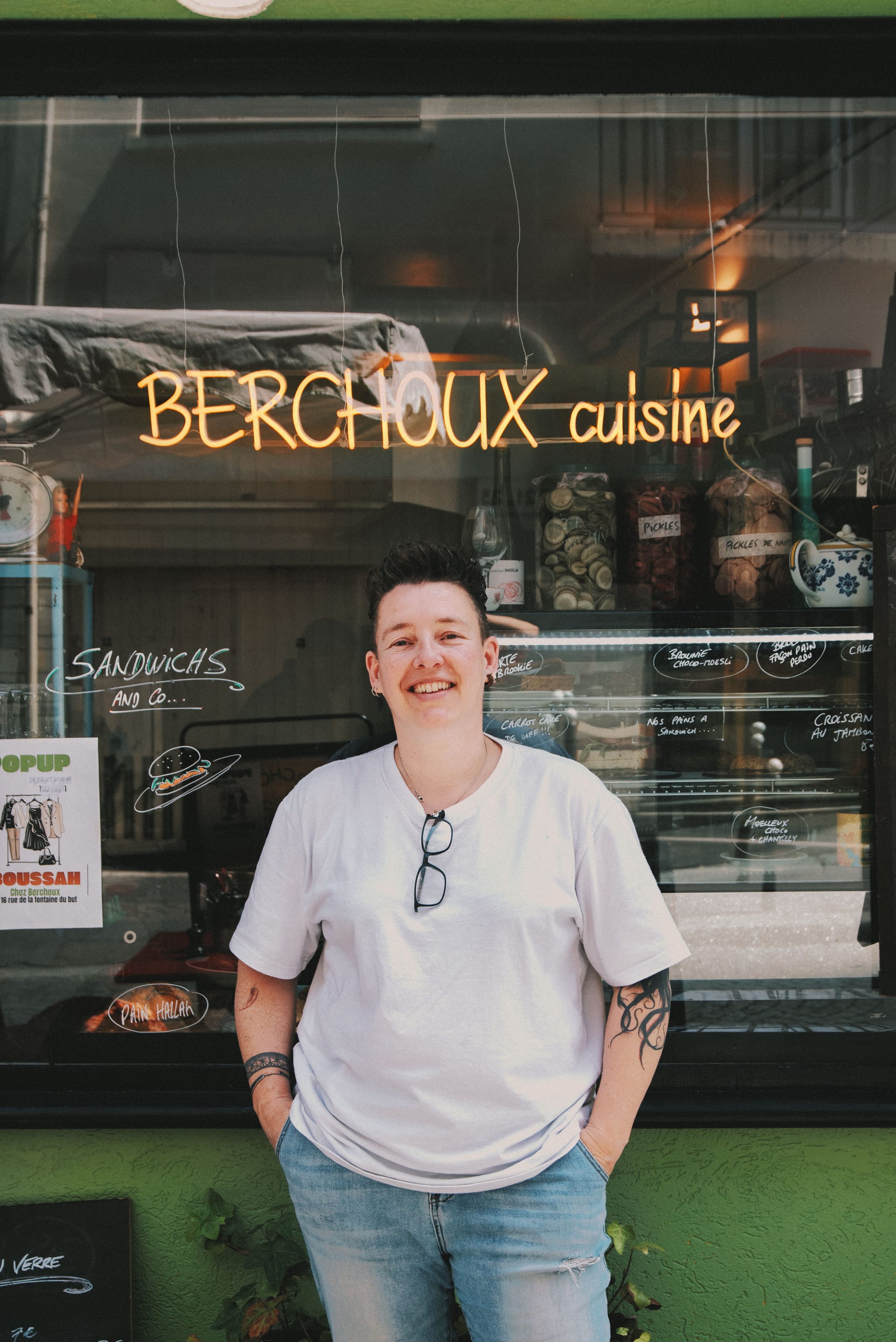
In France, traiteur is a food trade, like butcher or baker, born in neighbourhood shops.
It grew into event catering while keeping its focus on cooking.
What you expect from a traiteur: cooking, advice, presentation, sometimes service
A traiteur cooks and advises on quantities, formats and dietary balance.
Presentation matters, and some also handle setup or service.
A traiteur backed by a restaurant: a kitchen running every day
Restaurant-based caterers cook events with the same team and suppliers as the dining room.
You can taste the food before ordering, simply by coming for lunch.
Catering vs traiteur: the real differences
Taken in their most common sense, the two words show a few real differences.
| Criterion | Catering (common usage) | Traiteur (French trade) |
|---|---|---|
| Scale | Often large, even industrial volumes | Small to medium batches |
| Production | Often a central kitchen | A traiteur or restaurant kitchen |
| Homemade | Variable: cooking or assembly | Core to the trade, to be checked |
These are trends, not rules.
In Paris the words overlap: what matters is how they work
Small traiteurs call themselves caterers in English, and agencies say catering for artisan cocktails.
Look past the label: produce origin, place of production and who cooks.
Ask the right questions to know what will be on the plate.
The right word isn't catering or traiteur. It's “who cooks?”
Which format for which event?
Whatever the word, start by choosing the format.
Team lunch and meetings: meal trays
One individual tray per person, eaten around the meeting table.
See the format →Drinks, launch, afterwork: grazing cocktail
Standing sharing bites that keep guests moving.
See the format →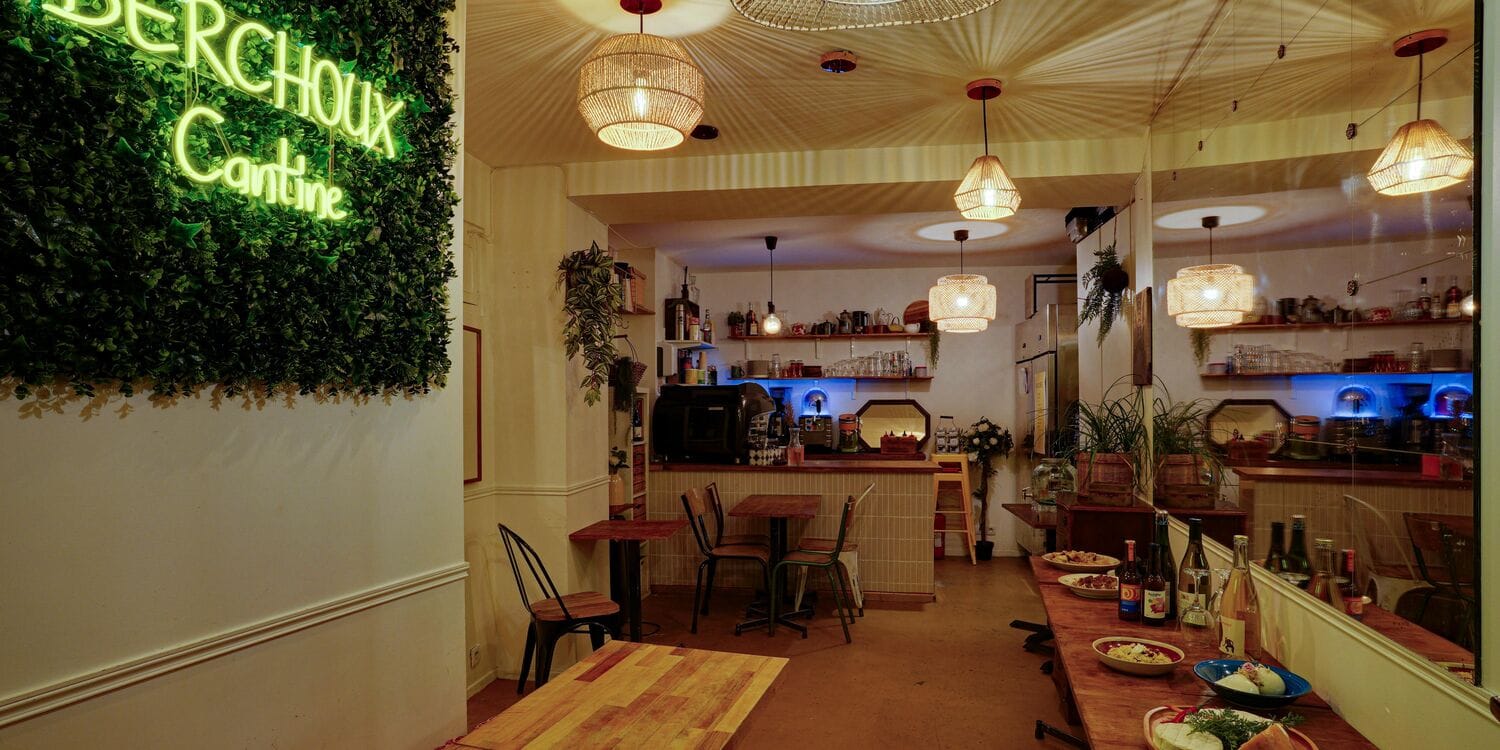
Host on site rather than ordering delivery
Our restaurant can be privatised for up to 30 people: 24 seated or 30 for a cocktail.
Discover private hire
Questions to ask, whether your provider says “caterer” or “traiteur”
A few questions are enough to see what lies behind the word.
01 · Who cooks, and where?
A restaurant kitchen, a traiteur's kitchen or a central kitchen?
02 · Homemade or assembled?
Ask what is made in house.
03 · What happens to leftovers?
An anti-waste approach shows in quantities and surplus handling.
For a complete method, read How to choose a caterer in Paris.
The Berchoux approach: a restaurant caterer, homemade and anti-waste
Berchoux is a restaurant at 105 rue Caulaincourt, Montmartre (Lamarck-Caulaincourt metro), cooking flexitarian, anti-waste market food since 2020.
It is led by chef Julie Berchoux, with 30 years in Michelin-starred kitchens: Robuchon, Ducasse, Taillevent, Fauchon.
We deliver across Paris and the near suburbs (about 5 km): see our delivery areas. For dessert, our signature carrot cake often ends the buffet.
Read more about anti-waste cooking and vegetarian vs flexitarian.
An event in mind?
Tell us about your project, guest count and venue: we'll suggest the format that makes sense.
FAQ
FAQ: catering and caterers
Are catering and traiteur the same thing?
Not exactly. Catering means supplying meals at any scale; a traiteur is a French food trade focused on cooking, advice and presentation. In Paris they often overlap.
How do you say traiteur in English?
“Caterer”. The activity is called “catering”.
Can a restaurant do catering?
Yes. It cooks your event with the same team and produce as its dining room.
What is corporate catering?
Meals supplied in a work context: meal trays, buffets, cocktails, seminar days.
What is the difference between a caterer and a meal delivery service?
Delivery services carry single dishes; a caterer designs a service for your event, with advice and presentation.
Going further
Now you know both words. See how we apply them: What is the difference between catering and a traiteur? The answer tastes better in our kitchen.