The origin of carrot cake: from rationing cake to Paris café star
Published on
A vegetable cake that became one of the most sought-after desserts in Paris: the story of carrot cake is one of long-standing resourcefulness, from carrots sweetening cakes when sugar was scarce to cream cheese frosting. We follow the thread, slice by slice.
Ask where carrot cake comes from and you uncover a small culinary riddle: how did a cake made with vegetables become one of the most requested desserts in Paris cafés? On paper, nothing destined it for fame. An orange root, a little flour, some spices, a white frosting. And yet the slice of carrot cake has settled onto coffee shop counters as well as neighbourhood canteen menus, to the point of becoming a ritual in its own right.
This success is no accident. It rests on a long history of scarcity, ingenuity and travel: an old European idea, revived by wartime kitchens, transformed by America, then adopted by Paris. In this article we trace the origin of carrot cake with the caution that food history demands, a field where legends often travel faster than archives. And we will see why a cake born of making do sits so naturally in an anti-waste market canteen in Montmartre.
In short
Carrot cake has no single origin: food historians link it to European puddings and cakes sweetened with root vegetables, at a time when sugar was expensive and carrots served as a natural sweetener. During the Second World War, rationing in the United Kingdom brought carrots back into sweet recipes. The United States then shaped the modern version, with nuts, spices and cream cheese frosting, in the second half of the 20th century. Coffee shops and the brunch wave finally brought it to Paris, often in a less sweet, more spiced version.
A carrot in a cake: an old European idea
Long before café display cases, Europe was already cooking sweets with root vegetables. Modern carrot cake descends, at least in part, from this very old tradition.
Medieval puddings and cakes sweetened with root vegetables
Food historians often mention, in medieval and early modern Europe, puddings and sweet pastes in which root vegetables played a central role. Carrots, parsnips, sometimes beetroot: these storage vegetables, easy to keep through winter, lent themselves to slow-cooked preparations, bound with eggs or breadcrumbs and lifted with spices when people could afford them.
These recipes are often described as distant ancestors of carrot cake. Caution is needed: this was not the soft, frosted cake we know today, but rather dense puddings, boiled or baked. The underlying idea, however, is already there: a vegetable from the garden can become dessert.
Why carrots: natural sugar when sugar was expensive
For centuries, cane sugar remained a costly import, reserved for wealthy tables. Honey helped, but not without limit. Yet among common vegetables, the carrot is one of the most naturally sweet. Grated and cooked, it brings sweetness, moisture and colour, three qualities every baker looks for.
This is the heart of carrot cake's origin: the carrot is not a health ingredient added for show, but a substitute sweetener, chosen out of necessity. This thrifty reflex, using what you have to replace what is missing, would cross the centuries and resurface at the most unexpected moment.
The Second World War and rationing: carrots to the rescue of home bakers
If the idea was old, the 20th century made it urgent again. With war, sugar became scarce once more, and family kitchens had to relearn the art of substitution.
Britain and wartime carrot recipes
During the Second World War, the United Kingdom rationed many foods, sugar among them. It is often reported that the British authorities encouraged people to eat locally grown vegetables, carrots first, and that sweet recipes circulated in which carrots replaced part of the sugar. Popular accounts have made this period one of the cradles of carrot cake; food historians nonetheless urge nuance: the period mainly popularised a practice that already existed, rather than inventing it.
A dessert born of making do: an early form of anti-waste baking
What stands out, in hindsight, is the logic of these wartime cakes: waste nothing, make the most of an abundant vegetable, give pleasure with little. Before the word even existed, this was a form of anti-waste baking. The cake was not conceived as a luxury, but as a way to keep a little sweetness in daily life by getting the best out of the vegetable garden.
This interlude of scarcity left a lasting mark: it fixed in people's minds the idea that a carrot cake can be genuinely good, and not merely a fallback. The ground was ready for others to take it up and turn it into an unashamed treat.
American carrot cake: nuts, spices and cream cheese frosting
The carrot cake you order today in a Paris café owes a great deal to the United States. That is where the cake of necessity became a celebration dessert, generous and instantly recognisable.
Its rise in the US in the second half of the 20th century
In the second half of the 20th century, carrot cake grew in popularity across the Atlantic. It appeared in family cookbooks, in diners, then in neighbourhood bakeries. The recipe grew richer: oil often replaced butter and kept the crumb soft, walnuts or pecans added crunch, cinnamon and gentle spices perfumed the whole. Some added raisins or pineapple.
It also benefited from a reassuring image: a cake made with vegetables seems more reasonable than most, even if it remains a true dessert. This double identity, indulgent and slightly virtuous, no doubt counted for much in its success.
Cream cheese frosting: how it became inseparable from the cake
Above all, it is the frosting that signs the American version. Cream cheese, a fresh spreadable cheese, is whipped with a little sugar and butter into a smooth, slightly tangy frosting. Its pairing with the spiced crumb works so well that it became the norm: for many, a carrot cake without cream cheese is no longer quite a carrot cake.
It is hard to date precisely when this frosting first appeared on the cake, and we will not put forward a year. What can be said is that the pairing took hold in the United States over the second half of the 20th century, before travelling with the rest of coffee shop culture.
What sets the American version apart
- A neutral oil rather than butter, for a very soft crumb.
- Walnuts or pecans for crunch, sometimes raisins.
- A blend of gentle spices led by cinnamon.
- A generous cream cheese frosting, the cake's signature.
Carrot cake, carotte cake, gâteau à la carotte: one dessert, several names
In France, people say carrot cake, carotte cake or gâteau à la carotte, and all three mean the same dessert. The Franglais carotte cake tells, in its own way, the story of a cake that reached France through its Anglo-Saxon version. We have already covered where these names come from in our homemade carrot cake recipe, so there is no need to go over it again here.
Carrot cake arrives in Paris: from coffee shops to neighbourhood canteens
The wave of Anglo-Saxon cafés and brunch
Paris long kept Anglo-Saxon cakes at arm's length, loyal to its own pastry tradition. Then came coffee shops inspired by London, New York or Melbourne, with their filter coffee, wooden counters and display cases of cakes. Carrot cake found a natural place there, alongside banana bread and cookies.
The brunch trend did the rest. Between eggs, pancakes and fresh juices, the slice of carrot cake became a weekend must, then an afternoon break staple. The cake left the realm of exotic curiosity and entered Parisian habits.
What Parisians kept from the original version (and what they adapted)
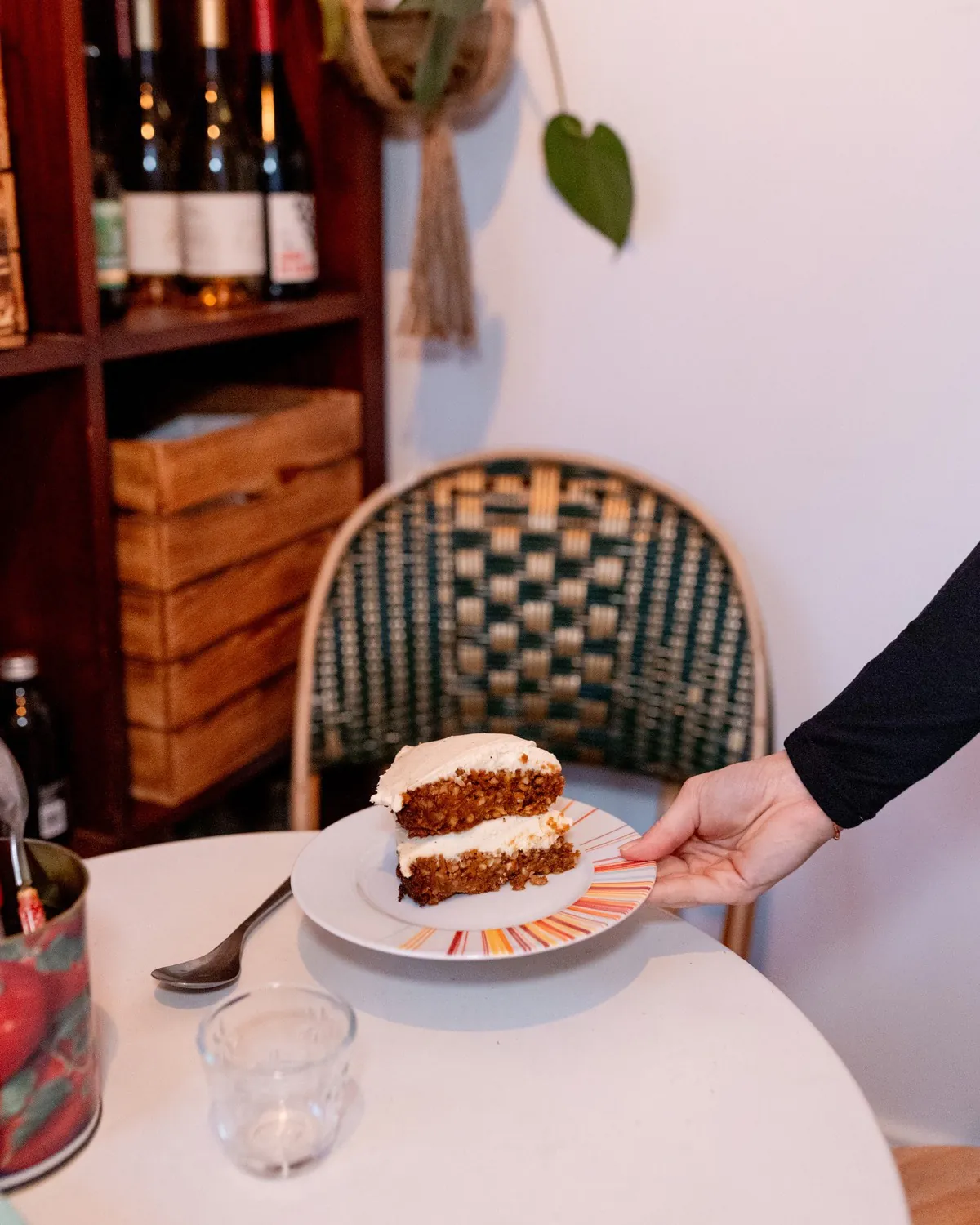
From the American version, Paris kept the essentials: grated carrot, a soft crumb and cream cheese frosting, which became non-negotiable. But many cafés and canteens adjusted the recipe to local palates: less sweet, more spiced, with a lighter frosting that lets the cake speak.
So what is an authentic carrot cake today? Probably less a fixed recipe than a balance: a carrot you can really taste, spices that perfume without overpowering, a soft texture and a fresh frosting. To judge that texture, we have devoted a page to a truly moist carrot cake, and to compare addresses, here is where to find the best carrot cake in Paris.
From rationing to anti-waste: why carrot cake belongs at Berchoux
A cake that celebrates a market vegetable
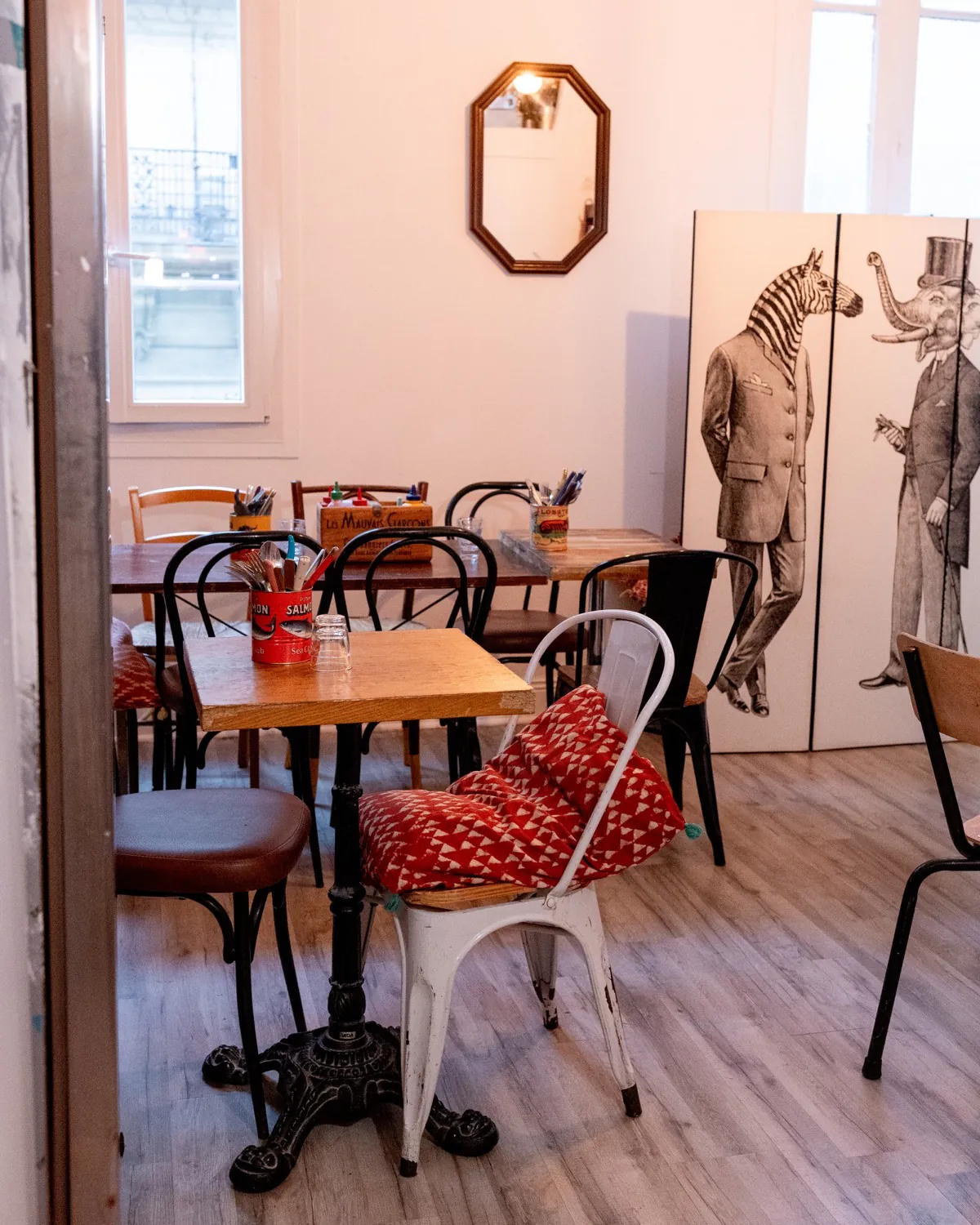
Telling the origin of carrot cake means telling the story of a common-sense cake: a humble vegetable turned into a treat so that nothing is lost and pleasure costs little. That is exactly the spirit of the anti-waste market cooking practised at Berchoux since 2020.
In this anti-waste canteen in Montmartre, the menu follows what the market delivers and produce is prepared on site so that nothing goes to waste. Carrot cake extends, in its own way, the logic of wartime kitchens: turning a simple ingredient into a treat that sacrifices nothing. To learn more about the method, read our article on how to cook without waste.
Chef Julie Berchoux's world-famous signature slice
Behind the slice is chef Julie Berchoux and her thirty years in Michelin-starred kitchens, alongside Robuchon, Ducasse, Taillevent and Fauchon. She now puts that standard to work in no-fuss counter baking.
Her carrot cake has become a signature slice, described as world famous and recognised on Google, on TripAdvisor and even in the English-language press. To discover our carrot cake in Montmartre, head to its dedicated page; and to get to know the chef who bakes it, read chef Julie Berchoux's career.

FAQ
FAQ on the origin of carrot cake
Where does carrot cake come from?
Carrot cake has no single inventor. It is traced back to European puddings and cakes sweetened with root vegetables, then to British carrot recipes of the Second World War, before the United States created the modern version with nuts, spices and cream cheese frosting.
Is carrot cake British or American?
Both, at different times. The United Kingdom helped popularise carrot cake, notably during rationing, while the version we know today, soft and topped with cream cheese frosting, mainly took hold in the United States.
Why put carrots in a cake?
Because carrots are naturally sweet. When sugar was expensive or scarce, they made it possible to use less while adding sweetness, moisture and colour. Today they still keep the crumb soft.
Since when has cream cheese frosting existed?
It is hard to give a precise date. The pairing of carrot cake and cream cheese frosting became established in the United States during the second half of the 20th century, before travelling with coffee shop culture.
Is carrot cake an anti-waste dessert?
By its history, yes: it was born of the wish to make the most of an abundant vegetable and to replace scarce sugar. At Berchoux, it is part of the anti-waste market cooking practised since 2020.
Where to taste carrot cake in Montmartre?
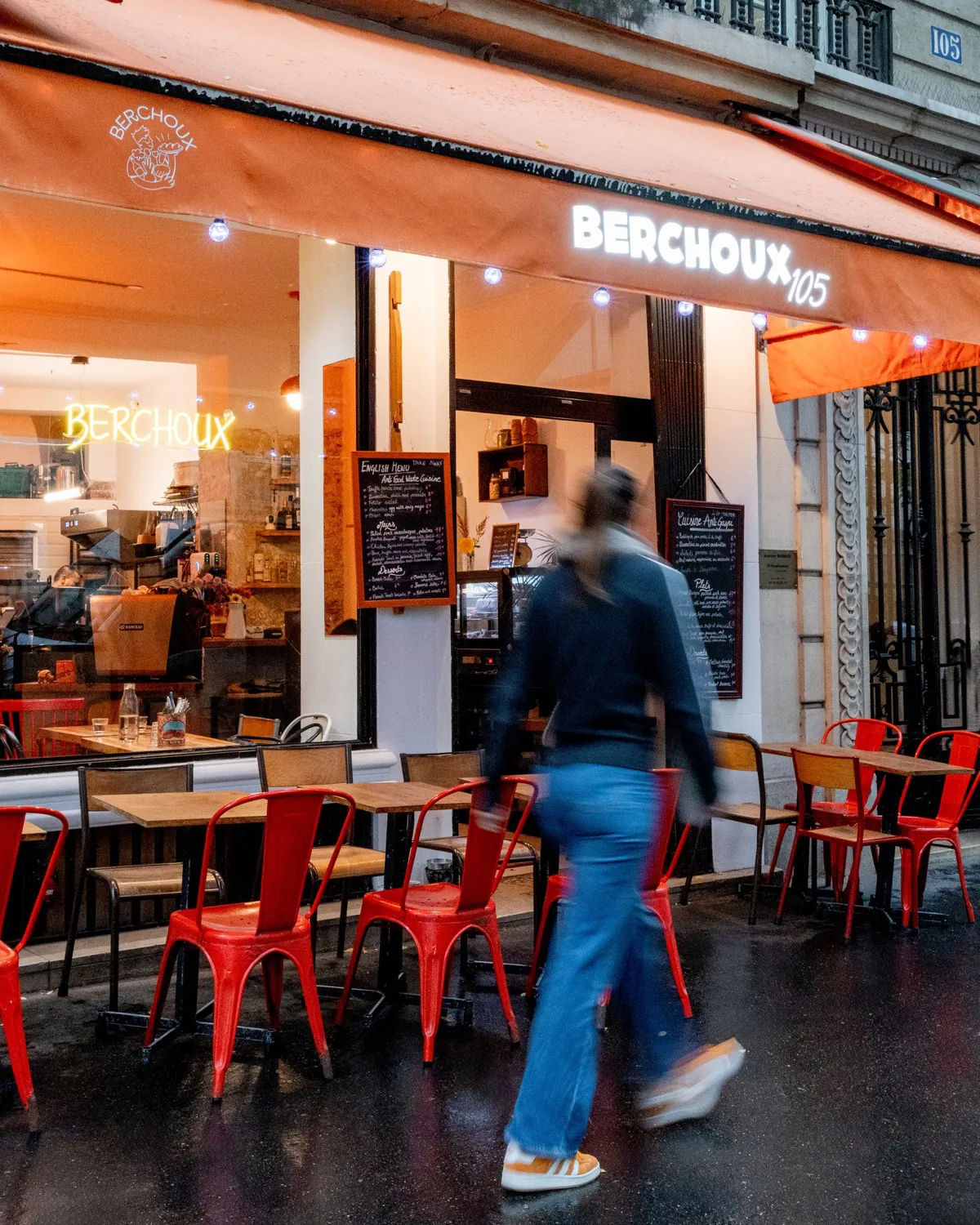
At Berchoux, 105 rue Caulaincourt, near Lamarck-Caulaincourt metro. Chef Julie Berchoux's signature slice can be enjoyed on site or taken away, and can be added at the end of a catering order.
In conclusion: a make-do cake turned signature
The origin of carrot cake comes down to one simple idea that has crossed the centuries: when sugar runs short, the carrot takes over. From European root-vegetable cakes to British rationing, from cream cheese frosted America to Parisian coffee shops, the cake has changed its face without losing its soul.
Come and taste the signature slice at the counter of 105 rue Caulaincourt, Lamarck-Caulaincourt metro, eat in or take away. You can also add it at the end of a catering order.
Go further
From history to tasting: discover our carrot cake Montmartre, the signature slice made on site.